What is Koji?
Koji is Aspergillus oryzae, a fungus foundational to many delicious Japanese foods and beverages. It is critical to the traditional production of sake, shochu, miso, soy sauce, mirin, pickled vegetables and many other things.
It can also be used to elevate your cooking with savoury flavours as part of a marinade. Bakers can use koji to make a unique sourdough starter, and powdered koji has a similar function to diastatic malt powder.
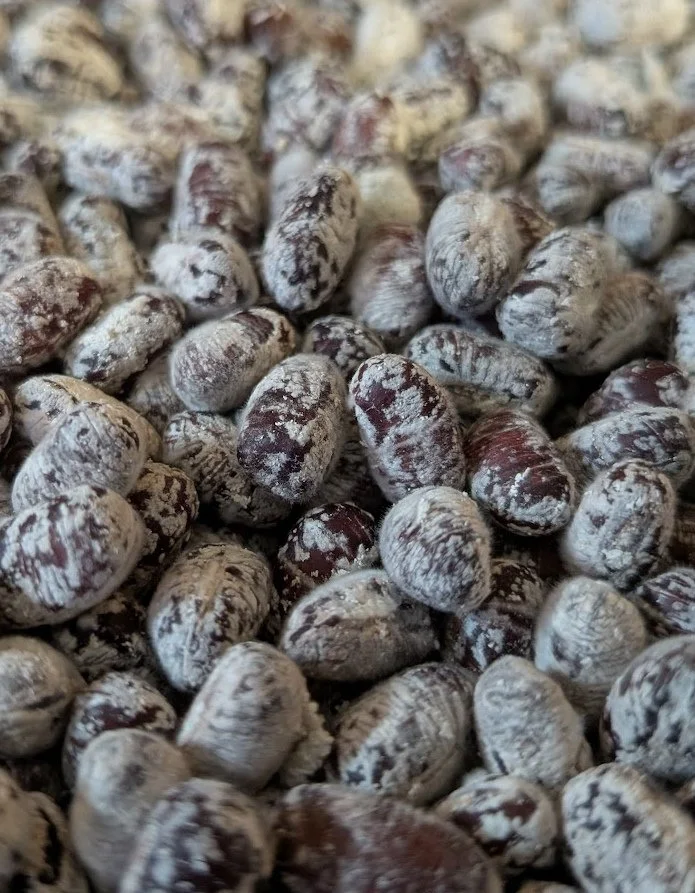
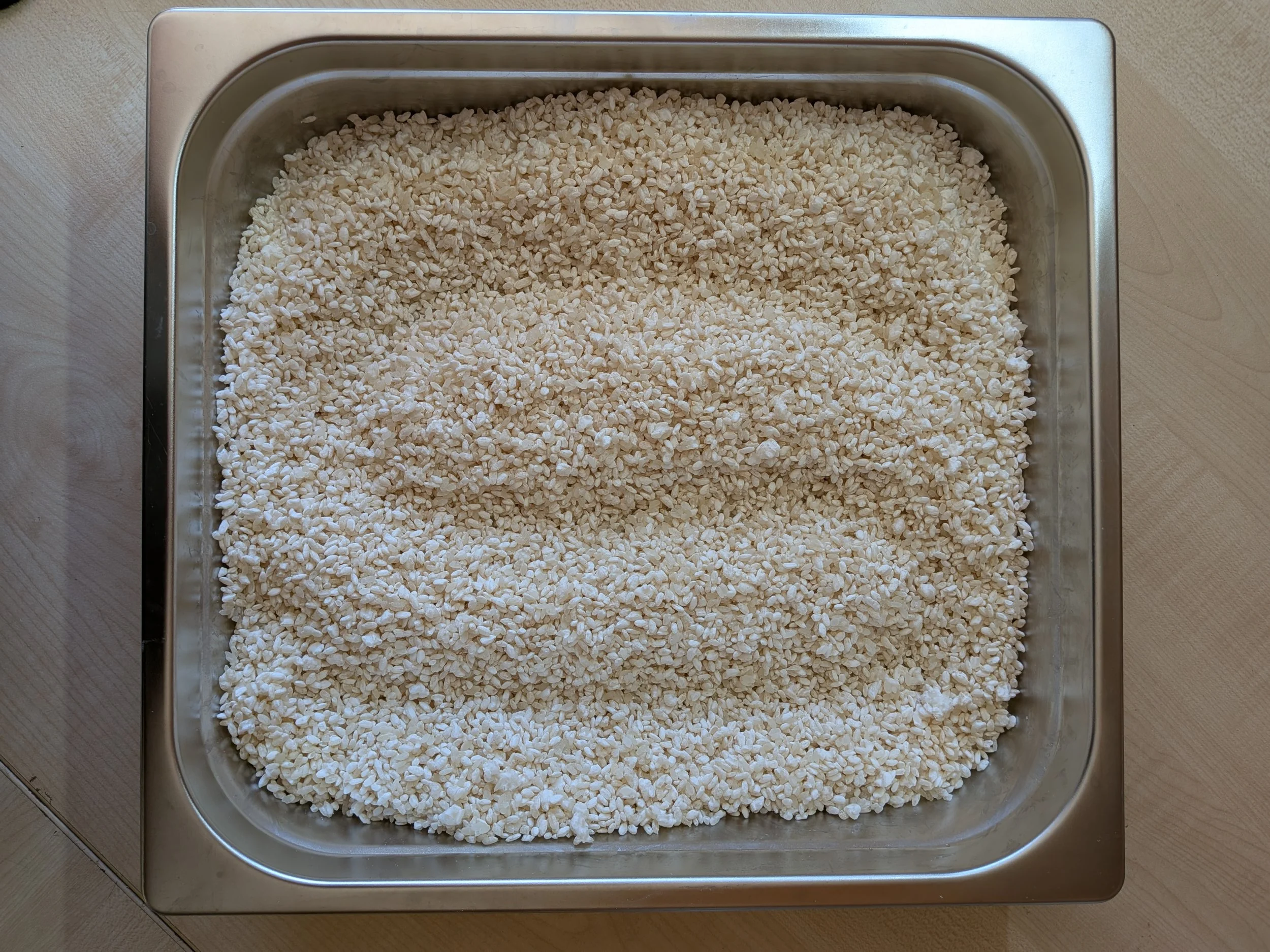
Koji is mostly grown on grains. Grains like rice or barley are soaked and steamed, then coated with koji spores. The mold grows and is tended over a few days, then the grains are harvested for use. Koji can be used fresh, or dehydrated for increased shelf life. If you are local to Canberra and would like fresh koji, please enquire by email. Any koji grown on rice in our shop is prepared gluten-free; barley koji contains gluten.
But what are you selling?
If you enjoy bread, beer, soft cheese, salami, or yogurt, you are eating something made using friendly fungi or bacteria. Koji is just another helpful microbe. Fermented foods are delicious! The strains of koji used in our products were purchased from Hishiroku, Japan’s oldest producer of koji spores, who have been in the business for more than 300 years.
It’s mold that you eat?
Why would you want to use Koji?
In a word: Flavour.
Koji is a versatile fungus that produces enzymes to break down starches and proteins into sugars and amino acids. When we harvest koji for food, we generally halt its growth at a stage where a lot of enzymes have been produced, but before the fungus makes spores. The enzymes can then be used to enhance the umami, or savoury flavour of food.
By coating meat in a marinade made from koji, salt, and water, you can develop an intense and rich savoury coating with simple pan-frying, like an instant maillard reaction. The same marinade will elevate vegetable dishes like sautéed broccolini, or grilled eggplant.
The unmistakable flavours of soy sauce and miso paste are both produced by enzymes acting on soybean proteins. Koji is the key to exploring the world of amino pastes and sauces, and creative cooks will find that producing complex, delicious preparations like fermented chilli-bean paste is surprisingly quick and easy once you have a good source of enzymes.
Amazake is a sweet, nourishing rice drink made using koji, cooked rice, and water. It can be used as a yogurt alternative, and is gluten and dairy free. When added to bread dough, it can produce a delightfully sweet and light loaf with a fine crumb.
Can I grow my own Koji?
You can! Growing koji is fun and fascinating. It will take a bit of D.I.Y. to make a growing chamber, and a fair bit learning to understand how to grow koji effectively and safely. If you just want to get to the cooking and eating part, and don’t want to run a microbiology experiment in your kitchen, why not let us supply it instead?
For information written on growing koji in English, see Koji for Life by Nakaji; or Koji Alchemy by Shih and Umansky.
A note to any aspiring growers; please only use spores prepared by commercial sources. It is not considered safe to try to propagate your own spores from a prior batch of koji.
If you have questions about koji growing, send me an email and I will be happy to try and help.
Contact
Interested in working together?
Fill out some info and we will be in touch shortly.